Alexandrite- Healing Properties, Color, Power & Facts
 Last updated : June 12, 2026 9:18 AM
Time and again regarded by a number of gem adherents as the stone, which is “ the emerald by day, ruby by night,” Alexandrite is a rare color-changing gemstone and is the variety of Chrysoberyl mineral. The chemical composition of this stone makes it so rare and hard to find. Alexandrite produces when beryllium and aluminium conglomerates together with few trace elements, like iron, chromium, and titanium. Out of these three chromium is the most important trace element for the formation and color-changing ability of this marvellous gemstone.
Alexandrite changes its color from bluish-green or green in the daytime to red or purple-red in bright light.
A level up from the charismatic gem nugget Alexandrite, Alexite is an artificially created gemstone that is similar to the color changing properties of the real gem, Alexandrite. It has an exceptional quality to absorb the colors that are broadcast across the spectrum when viewed under different illuminations. A created gem nugget, Alexite is analogous to a nature and variety of a hi-tech stone that has virtually no minerals found in the earth’s crust. The artificially infused minerals in this alluring hi-tech glass bestow the color changing peculiarity to it. Alexite seems like an orange color Tourmaline in the natural light and, on the other hand, green when seen in the fluorescent light. If talked about the Lavender Alexite, it changes its magnificent Amethyst color seen in a natural light to a Tanzanite blue hue in the fluorescent light. Alexite is often speculated as a durable gemstone that holds a vibrant colors throughout its facets as well as shows the radiant constancy from edge to edge. The in-house fabrication of Alexite gains its importance due to the resemblance of Alexandrite. Alexandrite and Alexite both acquires the colors that are broadcast across the spectrum when viewed under different illuminations.This resourcefulness of the gemstone is a much sought after characteristic in today's gemstone market, and that's the unique selling proposition of the beautiful Alexite. Alexite comes in two forms one is Autumn Alexite, and another one is Lavender Alexite. The hardness of the stone allows the designers and the craftsmen to craft into various shapes such as Trillion, Pear, round and many others.
A lab-grown, Alexite is a version of Yttrium Aluminium Garnet Y4Al2O9 in short known as YAG is currently employed in laser engineering. Alexite can too be formed in several forms such as colorless, colored or a stone with a pattern that shifts the color depending on the ambient luminance.
Alexite a synthetic model of alexandrite which is named after Czar Alexander of Russia as it is considered to let out along the ruler’s 18th birthday in the yr 1830. The masses of Russia or say in Russian tradition, it is thought that its red, pinkish or green color bring luck and prosperity to life’s of the masses. Further, there is a misconception that when a single piece of Alexite is worn then it invites loneliness in the life of a wearing soul. Therapists who use stones to cure the problems of the multitudes, use Alexite to strengthen intuition in crucial moments and believes that this captivating stone aids creativity as well as enlivening the imagery.
A mesmerizing synthetically created gemstone, Alexite came into existence in the 1800s and were market since then. Initial offerings were made by synthesizing corundum infused with vanadium to attain the color-changing effect. All the same, this version was well named by geologists as a facsimile. By the year 1975 the trend of making Alexite changes, manufactures start using flux-melt to raise it and till today this is considered a preferable method. Though, Flux grown synthetic Alexite is a tiresome and challenging procedure but the good thing is it resembles the real alexandrite in physical and chemical makeup. The hardness of this stone measures 8.5 on the Mohs scale, known as a member of the chrysoberyl family; it too includes beryllium aluminum oxide as a chemical composition. Often esteemed as a traditional gift, it is viewed as the best alternative gift for 45th and 55th anniversaries.
Alexandrite Silver Jewelry >>
-
-925-sterling-silver-ring-jewelry-m86886.JPG "Clearance Sale-3.22cts green alexandrite (lab) 925 sterling silver ring jewelry size 7 m86886")
Primary Stone : alexandrite (LAB)
Model # M86886
Stone Weight : 3.22
Size (inch) : 7
Weight (Gms) 4.02
New$11.99 -
-925-sterling-silver-holy-cross-earrings-p43176.JPG "5.50cts green alexandrite (lab) 925 sterling silver holy cross earrings p43176")
Primary Stone : alexandrite (LAB)
Model # P43176
Stone Weight : 5.50
Size (inch) : 1 5/8
Weight (Gms) 5.45
New$13.99 -
-925-sterling-silver-holy-cross-earrings-p43180.JPG "5.75cts green alexandrite (lab) 925 sterling silver holy cross earrings p43180")
Primary Stone : alexandrite (LAB)
Model # P43180
Stone Weight : 5.75
Size (inch) : 1 5/8
Weight (Gms) 5.69
New$13.99 -
-925-sterling-silver-holy-cross-earrings-p58463.JPG "5.74cts green alexandrite (lab) 925 sterling silver holy cross earrings p58463")
Primary Stone : alexandrite (LAB)
Model # P58463
Stone Weight : 5.74
Size (inch) : 1 5/8
Weight (Gms) 5.47
New$13.99
Where is Alexandrite found?
Russia has been the major source of this rare gemstone, but nowadays it is found in India, Zimbabwe, Burma, Tanzania, Sri Lanka Madagascar, and Brazil as well.
Healing Properties
Alexandrite is considered mainly as the stone of longevity and affluence. It pacifies and balances the mind and body of a person, and gives him emotional strength. The other reasons associated with the use of this stone are:
Healing properties: This magical stone determines the health of the person by changing its color. Alexandrite is believed to purify the blood, strengthening blood vessels, and improving blood flow.
Used as an amulet: It makes the person calm and peaceful, and hence it is good for people who are short-tempered, therefore alexandrite is widely used as a talisman.
Considered as a magical gemstone: Alexandrite is the stone for healing the seventh chakra of the body, which is “Sahasrara”. It is believed that the person who wears alexandrite establishes a balance in his body, between the mental, physical, and astral elements. It makes the wearer feel more peaceful, and it also fosters intuitive power and imagination.
Alexandrite Facts
Some facts about Alexandrite:
- It is said that Alexandrite brings good fortune for its owner.
- Alexandrite s believed to cure leukaemia and its infirmities.
- It boosts confidence and strengthens the self-esteem in a person.
- Some people also believe that Alexandrite can clarify doubts about love and marriage when hold in hand.
- Alexandrite was found in 1830 and was named after the Czar Alexander II of Russia on the occasion his birthday.
- The Smithsonian Institution is the house to the world's largest known beautiful Russian alexandrite, which weighs 66 carats.
- The largest gem quality alexandrite called as the Sauer Alexandrite was found in 1967, in Bahia, Brazil. It was a 122,400-carat uncut crystal.
- Alexandrite is a stone, which can exhibit two phenomenon at the same time, which are color change and cat’s eye.
- Alexandrite is the stone for people who were born in the month of June
Metaphysical Properties
Alexandrite has a hardness of 8.5, and the distinctness of this stone can be determined by its color changing ability. The more is the color change ability of Alexandrite, the more is its value. However, any stone carrying the value of 1 carat is difficult to find.
Alexandrite at a Glance
| Cleavage | Good, in one direction |
|---|---|
| Other Names | NA |
| Crystal Habit | Crystals tabular or short prismatic, prominently striated |
| Streak | White |
| Refractive Index | 1.746-1.755 |
| Diaphaneity | Transparent |
| Moh's scale (hardness) | 8.5 |
| Sources | India, Zimbabwe, Burma, Tanzania, Sri Lanka Madagascar, and Brazil |
| Chemical formula | BeAl2O4 |
| Lustre | Bright Vitreous |
| Color | In Incandescent Light: Orangy, Brownish Red To Purplish Red; In Fluorescent, Daylight: Yellowish, Brownish, Grayish, Bluish Green |
| Chakra Healing | Crown chakra |
| Birthstone | June |
| Zodiac | Gemini |
Alexandrite Color
Alexandrite like most of the other stones is found in different colors. Bright red and green alexandrite stones are much sought after.

Alexandrite In News
Rarest & Beautiful Gemstones Of The World
Share this post:


Interested in gemstones? Would you like to know about the world’s most beautiful and rarest gemstones? Here...
This Christmas Give Your Love One A Lasting Gift
Share this post:

When Christmas is just around the corner you can immediately choose a lasting gift for your loved one simply by buying a...
Alexandrite – a Stone for Fostering Immune Power
Share this post:
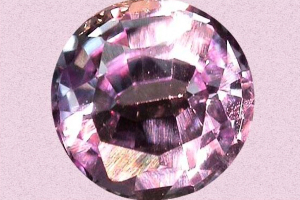
Alexandrite is a rare charm which possesses the feature of changing color is a family member of Chrysoberyl mineral. The...
-925-sterling-silver-ring-jewelry-m86887.JPG "Clearance Sale-3.22cts green alexandrite (lab) 925 sterling silver ring jewelry size 7 m86887")
-925-sterling-silver-necklace-jewelry-m86776.JPG "Clearance Sale-Green alexandrite (lab) 925 sterling silver necklace jewelry m86776")
-925-silver-poison-box-pendant-p44920.JPG "4.13cts color change alexandrite (lab) 925 silver poison box pendant p44920")
-925-sterling-silver-dangle-earrings-m86741.JPG "Clearance Sale-Green alexandrite (lab) 925 sterling silver dangle earrings m86741")